The Future of Pathology Part 3: The Delivery Problem and the Infrastructure of Intelligence
After Part 1 and Part 2, many of you asked how the argument ends. This is where it lands.

When a field reaches consensus, it usually means the real work is about to begin.

Over the past two essays, I argued that the greatest challenge in precision oncology is no longer discovery. We continue to identify powerful biomarkers, develop increasingly sophisticated AI models, and generate molecular insights at an unprecedented pace. Scientific discovery creates possibility. Delivery creates outcomes.

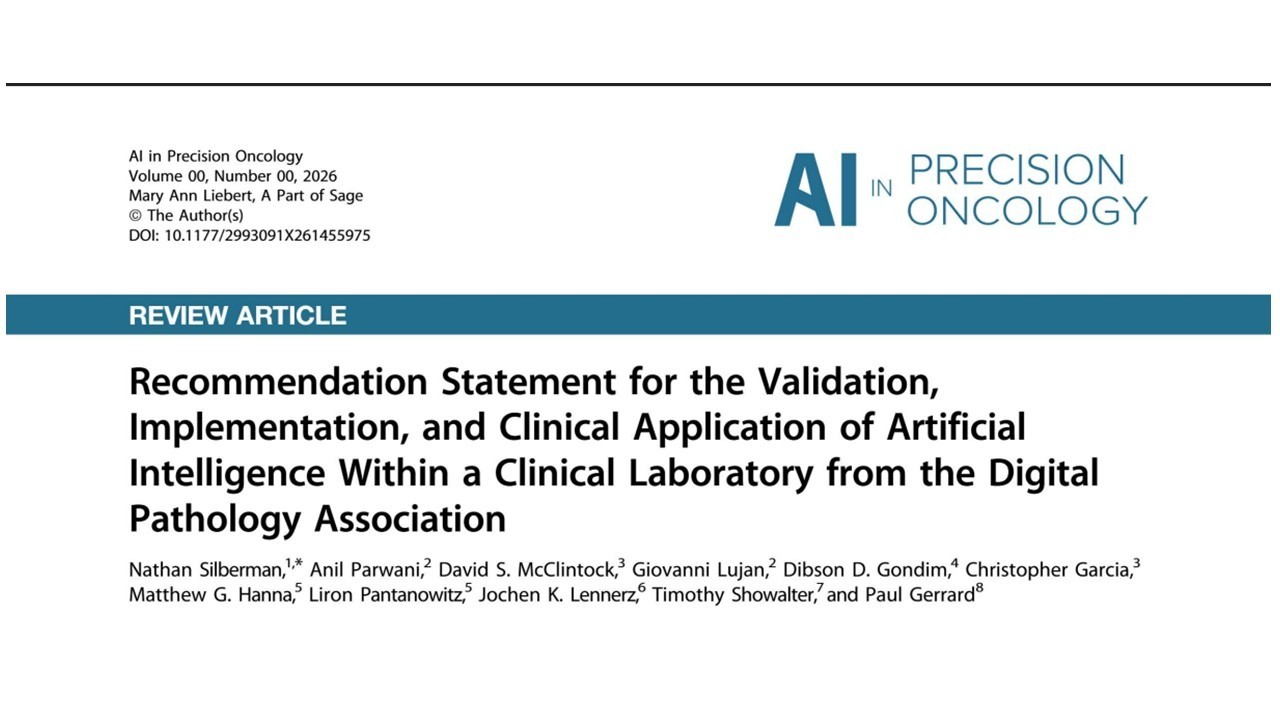
This week, the Digital Pathology Association released a comprehensive recommendation statement on the validation, implementation, and clinical application of artificial intelligence in digital pathology. What struck me was not what was new, but what it quietly confirmed. The document is nominally about artificial intelligence. What it really describes is the operating environment required for precision medicine.

Three recommendations reveal just how much the conversation has changed.

1. Variability

The first concerns scanner variability. The article is explicit: algorithm performance depends on the scanner on which it is deployed, and validation must be demonstrated for each platform. This is more than a technical consideration and an acknowledgment of operational reality. Hospitals rarely operate identical hardware, workflows, or laboratory environments, and precision medicine must succeed despite that variability, not because it has been eliminated.

2. Oversight

The second concerns pathologist oversight. The recommendation is unequivocal: AI augments clinical expertise but does not replace it. In daily practice, this feels less like a regulatory requirement than a recognition of clinical reality. While AI excels at narrowly defined tasks, pathologists must integrate morphology, clinical history, molecular findings, rare disease patterns, and diagnostic judgment that no training set fully anticipates. The future is not autonomous diagnosis. It is intelligently augmented expertise.

3. Clinical Utility

The third concerns clinical utility, and this is where the bar is raised most significantly. A high-performing model is not enough. Clinical utility requires evidence that using the result actually changes patient management and improves outcomes. In dermatopathology, where a melanoma grading decision can determine treatment intensity, that distinction is not abstract. It moves the conversation beyond developing algorithms to delivering measurable clinical value, and that is a fundamentally harder problem.

Taken together, these recommendations describe something much larger than AI governance. They describe the infrastructure required for intelligence to become healthcare.

We have seen this pattern before. GPS technology existed for decades, yet it did not transform everyday life simply because satellites became more accurate. It became indispensable only when maps, smartphones, cloud computing, wireless networks, and real-time traffic data converged into a seamless ecosystem. The breakthrough was not a better satellite. It was the infrastructure that allowed millions of people to benefit from the intelligence those satellites had been generating all along. Precision oncology is approaching a similar inflection point. The biomarkers exist, the algorithms exist, and our biological understanding continues to expand. What remains inconsistent is the operational layer that validates performance across diverse environments, orchestrates workflows, connects fragmented systems, governs quality, and delivers the right intelligence at the precise moment a clinical decision must be made.

The conversation is evolving. We are moving from asking “Can AI detect disease?” to asking “What system ensures that AI improves care, every case, every day?” That is a much more difficult question, and it is the one that will determine whether precision medicine scales beyond a handful of highly resourced institutions or becomes accessible to patients everywhere.

Discovery will continue to accelerate. But the breakthroughs that matter are the ones that become routine, and that requires infrastructure, execution, and a field willing to treat delivery as seriously as discovery.

About the Author

Dr. Rajendra Singh is a Professor of Pathology at the University of Pennsylvania and co-founder of PathPresenter. He serves as a member of the Digital and Computational Pathology Committee of the CAP, Editorial Board of the WHO for Classification of tumors, 5th Edition and the Board of Digital Pathology Association.

What ASCO Taught Me About the Future of Pathology – Part 2

TROP2, Tissue, and the Missing Spatial Dimension

Last week, I wrote that the future of pathology would not be defined by any single technology—not AI, not molecular testing, and not digital pathology alone. Rather, the future belongs to those who can read tissue morphology, imaging, molecular biology, and clinical outcomes as a single integrated story rather than four separate chapters.

The discussions that followed were illuminating. Conversations with radiologists, oncologists, data scientists, and colleagues across the pharmaceutical industry reinforced something I had already begun to suspect: many of the most important questions in precision medicine no longer sit comfortably within the traditional boundaries of a single specialty.

As I reflected on the clinical data presented at ASCO this year, one story stood out because it illustrates exactly where this convergence may be heading. That story is TROP2.

Why TROP2 Matters: The Architecture of an ADC

For those not immersed in oncology drug development, TROP2 (trophoblast cell-surface antigen 2) is a transmembrane glycoprotein expressed across a wide range of epithelial malignancies, including lung, breast, bladder, and endometrial carcinomas. It has become a major target in oncology because it serves as an address for a rapidly expanding class of therapies known as antibody-drug conjugates (ADCs).

The concept is elegant. An antibody binds a target on the cancer cell, carries a highly potent cytotoxic payload, and delivers that payload into the cell following binding and internalization. In practice, many ADCs—including TROP2-directed therapies—also exert a “bystander effect,” where payload can diffuse into neighboring cells, making therapeutic activity less dependent on perfectly uniform target expression.

At ASCO, clinical data across multiple programs continued to reinforce the potential of this strategy. Early-phase and emerging late-phase results suggest meaningful clinical activity for TROP2-directed ADCs, including in combination with immunotherapy in selected settings. With multiple global trials underway across tumor types, this represents one of the most active areas of drug development in oncology today.

There is clear biology here—and real benefit for patients who respond. Yet as these data accumulate, a fundamental question becomes harder to ignore: how do we determine which patients will benefit most? The answer may expose a broader limitation in how we currently define biomarkers.

What the H-Score Misses

Today, our approach to TROP2 remains centered on expression. Pathologists stain tissue, evaluate intensity and extent, and report a score. Computational approaches have improved on this by quantifying expression more reproducibly and, in some cases, distinguishing subcellular localization.

These are meaningful advances. But they are still asking the same core question: What is the biology of TROP2?

At the microscope, the question often feels different: What is the biology surrounding TROP2?

A biomarker is never seen in isolation. Tumor cells exist within a structured environment: immune cells attempting to infiltrate, fibroblasts shaping stromal architecture, and physical barriers organizing the tumor into compartments. The tumor–stroma interface—the boundary between malignant epithelium and host response—is often where critical biology resides.

Experienced pathologists recognize these patterns intuitively. When I am teaching residents, I remind them that the tissue is often smarter than the pathologist. If the stroma is walling something off, that reaction is telling you something. The interface between tumor and host is rarely silent. Yet much of this contextual information is lost when complex tissue architecture is reduced to a single expression score.

That raises an important possibility: What if response to TROP2-directed therapy depends not only on target expression, but also on the biological context in which that target exists?

The Missing Spatial Dimension: An Ecosystem Approach

Consider the immune microenvironment.

A tumor with high TROP2 expression but minimal immune infiltration may behave very differently from one with the same expression profile embedded within an organized immune response. The molecular target may be identical, but the surrounding ecosystem is not.

Preclinical and early clinical observations suggest that ADC activity may interact with the tumor microenvironment in ways that extend beyond direct cytotoxicity. If those interactions contribute to clinical response, then baseline tissue architecture—including immune organization—becomes an important variable that current biomarker strategies only partially capture.

This concept is not new. In colorectal cancer, the Immunoscore demonstrated that the spatial distribution of immune cells—particularly at the invasive margin—has strong prognostic value and has influenced how we think about tumor–immune interactions more broadly.

Yet we have only begun to ask whether similar spatial features influence response to ADCs such as those targeting TROP2.

Even at a purely physical level, tissue architecture may matter. A TROP2-high tumor with dense stromal compartmentalization could experience very different drug delivery and payload diffusion dynamics than a tumor with a more permissive structure. These are measurable features—but they are rarely incorporated into current biomarker frameworks.

This points toward a broader realization: we may have spent years searching for answers in individual molecules when the more informative signal, in some settings, lies in the relationships between them—their spatial arrangement, biological context, and interaction within a tissue ecosystem.

Beyond the Slide

The second observation that stayed with me after ASCO is that biology does not operate at a single scale.

Tumors do not live on glass slides. They exist within tissues, tissues within organs, and organs within patients. It follows that response to therapy is shaped across all of these levels simultaneously.

Some relevant features are visible histologically. Others emerge through imaging, molecular profiling, or longitudinal clinical data. Increasingly, computational approaches are making it possible to integrate these layers.

The central question for precision oncology is no longer which modality is most informative in isolation. It is whether these modalities are capturing different dimensions of the same biological system—and whether we are building the infrastructure to interpret them together.

For decades, medicine has organized these data into separate workflows, databases, and specialties. Biology never made those distinctions.

The Bigger Lesson

TROP2 is not the story. It is a case study.

For the past two decades, precision medicine has focused on identifying the right molecule—and that approach has transformed cancer care. But in some contexts, the molecule alone may not be sufficient to explain therapeutic response.

Tumors exist within tissues. Tissues exist within organs. Organs exist within patients. Every level contains information. Every level influences outcome.

This is why pathology is becoming more important—not less—in the era of AI and advanced molecular diagnostics. Not because it replaces other disciplines, but because it is inherently grounded in biological context.

The role of the pathologist is evolving accordingly. It is no longer limited to interpreting a slide or assigning an expression score. It increasingly involves connecting tissue architecture, molecular data, imaging, and clinical outcomes into a more complete model of disease.

That integration is beginning to take shape. The groups that build this connective infrastructure first will be positioned to answer some of the most important biomarker questions in oncology.

The tissue has been telling us this story for years. Imaging has been telling the same story from a different vantage point. Molecular data and clinical outcomes add additional layers. For most of modern medicine, we have read these stories separately.

We are finally learning how to read them together.

About the Author

Dr. Rajendra Singh is a Professor of Pathology at the University of Pennsylvania and co-founder of PathPresenter. He serves as a member of the Digital and Computational Pathology Committee of the CAP, Editorial Board of the WHO for Classification of tumors, 5th Edition and the Board of Digital Pathology Association.

What ASCO Taught Me About the Future of Pathology

A field report from the world’s largest oncology meeting—and a call to my fellow pathologists.

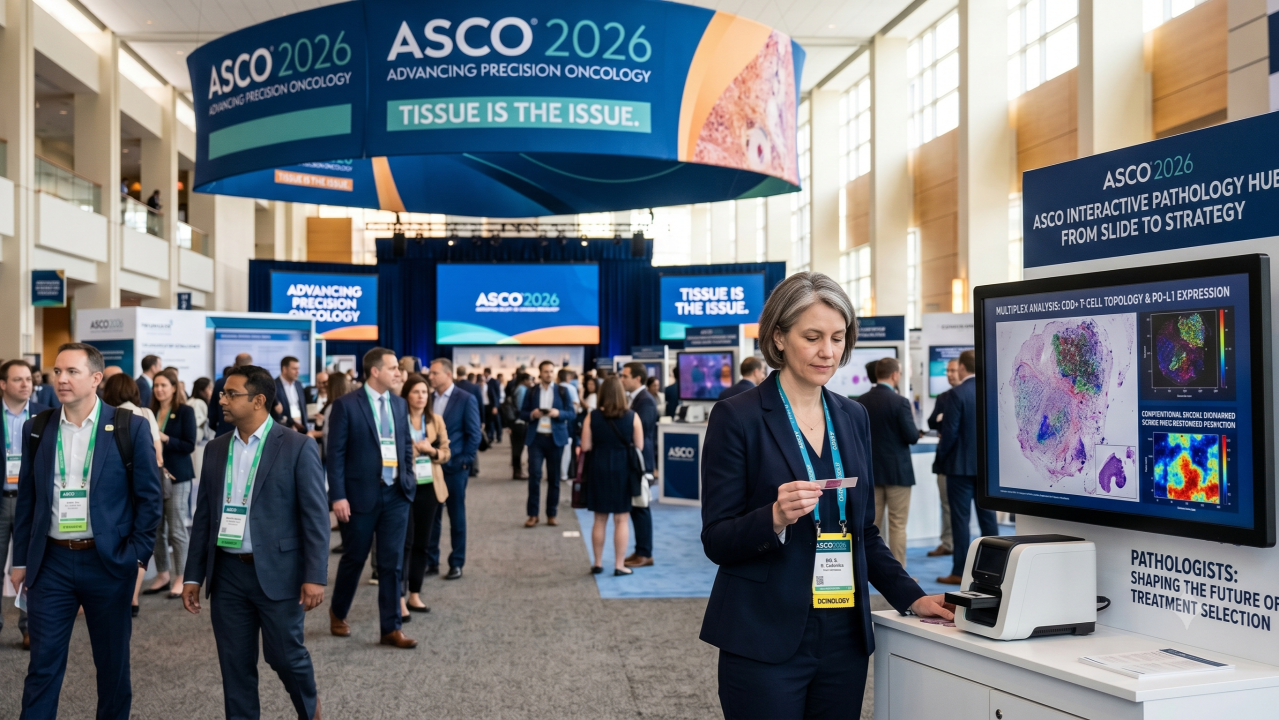
This weekend, I joined tens of thousands of oncologists, researchers, pharmaceutical executives, and data scientists at the ASCO Annual Meeting. The entire cancer medicine ecosystem was gathered in one place.

Yet among the thousands of people discussing the future of cancer care, I could count the pathologists on two hands.

I sat through presentations on antibody-drug conjugates (ADCs), immunotherapy combinations, spatial biomarkers, and novel companion diagnostics. Different diseases. Different companies. Different therapeutic strategies. Yet I found myself writing the same note repeatedly in the margin of my notebook:

This depends on pathology.

The more I listened, the more obvious it became that many of oncology’s biggest challenges are no longer drug problems. They are patient-selection problems. And patient selection begins with understanding tissue.

The industry is chasing the biology that pathologists have spent their careers studying.

For the first time in my career, I believe pathology is positioned not only to diagnose disease, but to help determine treatment.

1. The Industry Is Chasing Tissue Biology

No matter the disease or the drug class, the central question in oncology today is patient selection. Who will respond? Who will benefit? Who should receive this therapy?

Whether the discussion involved checkpoint inhibitors, ADCs, or cellular therapies, the answers do not live in a liquid biopsy or a genomic sequence alone. They live in tissue architecture inside the tumor microenvironment, within the spatial relationships between malignant cells and immune infiltrates.

The answers oncologists are looking for reside in tissue. And that means pathology must be at the table.

2. The H&E Slide Is Far Richer Than We Imagined

The glass slide sitting under our microscopes contains a vast reservoir of unextracted information. Spatial arrangements of immune cell subsets, subtle variations in stromal organization, cellular heterogeneity across a specimen are not incidental features. They are biological signals that influence treatment response and clinical outcomes.

Digital pathology, computational modeling, multiplex imaging, and AI allow us to quantify what was previously qualitative, transforming what we have always observed into measurable, reproducible biological data.

These technologies are not replacing the pathologist’s eye. They are extending its reach. This is not a disruption to pathology; it is pathology at greater resolution.

3. Pathology’s Second Act: From Diagnosis to Treatment

For most of my career, pathology has answered the first question in cancer care: What disease does this patient have? Oncology is now asking a second question: What treatment is most likely to help this patient?

That question increasingly depends on information embedded within the tissue itself:

  • Why does one patient respond to immunotherapy while another progresses?
  • Which features of the tumor microenvironment predict resistance?
  • What makes a targeted therapy effective in one patient and ineffective in another?

These are pathology questions. And they are among the most consequential questions in medicine today.

4. Why Pathologists Must Lead

No algorithm inherently understands tissue biology. No software comprehends the clinical weight of a diagnostic error. Pathologists do. That is precisely why we must be the ones evaluating, validating, and challenging these tools, separating what is biologically meaningful from what is merely statistically interesting.

The pathologist of the next decade will need an expanded toolkit. We must learn how to interpret spatial biology, understand AI-derived biomarkers, engage with computational pathology, and participate in the development of the next generation of companion diagnostics. This is not about abandoning what we know; it is about building on it.

The future of oncology cannot be built by software engineers or clinical oncologists alone. It requires pathologists who speak both the language of tissue and the language of data.

The future of pathology will not be determined by artificial intelligence. It will be determined by whether pathologists choose to engage with it.

The tools are changing. The mission is not.

Defining the Future

When I return to ASCO next year, I hope I need more than two hands to count the pathologists in attendance. Not because we are defending our relevance, but because we are helping shape the future of cancer care.

The future of precision oncology is being built now.

And pathology belongs at the center of it.

About the Author

Dr. Rajendra Singh is a Professor of Pathology at the University of Pennsylvania and co-founder of PathPresenter. He serves as a member of the Digital and Computational Pathology Committee of the CAP, Editorial Board of the WHO for Classification of tumors, 5th Edition and the Board of Digital Pathology Association.