Pathoverse Part 1: Introducing the Pathoverse

This article summarizes part 1 of our “Into the Pathoverse” webinar, recorded at Pathology Visions 2025 in San Diego and available on-demand. Watch the full video.
Every major innovation begins with a spark—a problem so persistent and universal that someone finally decides to solve it. For PathPresenter, that spark came from a challenge faced by pathologists everywhere: managing digital pathology images at scale.

In his opening segment of the Pathoverse webinar, Dr. Raj Singh described how the company emerged from his frustration as a practicing pathologist with the growing complexity of image management. Handling a handful of digital slides was easy. But as datasets grew, image formats multiplied, and systems evolved independently, turning those images into usable, accessible clinical assets became a major challenge. What pathologists truly needed, he argued, was a seamless environment where cases appeared when needed, workflows were smooth, and data interoperability happened quietly in the background.

That vision became the foundation of PathPresenter.

A Platform Built by Pathologists, for Pathologists

Dr. Singh emphasized that PathPresenter was never conceived as a technology-first company. Instead, it was built around deep domain knowledge and the lived experience of practicing pathologists. The team behind it—largely pathologists themselves—understood the daily frictions of digital pathology. Their goal was straightforward: create tools they would be proud to use in their own departments.

One of the platform’s defining characteristics is its agnostic design. PathPresenter supports virtually any scanner, AI algorithm, LIS environment, or storage setup. This flexibility reflects a simple reality: pathology labs operate with diverse systems, and forcing uniformity only creates new barriers.

This commitment has paid off. The open PathPresenter platform has grown to more than 70,000 users across 180 countries, with institutions uploading data from every type of scanner and imaging modality. In the U.S., more than 60 institutions now use the enterprise version of the platform for clinical, educational, and research workflows. This global scale has provided the PathPresenter team with unparalleled real-world experience in managing digital pathology data.

Filling Gaps in Digital Pathology

Throughout the webinar, Dr. Singh highlighted how PathPresenter has consistently focused on solving unmet needs in the digital pathology space. Early on, education emerged as a critical gap. In response, PathPresenter developed what has become one of the most widely used digital training platforms for pathology residents and fellows.

The company then expanded into remote consultations, building the first robust digital consult platform. Later came a biobanking module designed to help institutions unlock the value of their data by making it securely accessible to researchers, AI developers, and pharmaceutical partners.

Together, these components form an end-to-end ecosystem that supports:

  • Clinical diagnosis and consultation through an enterprise case management system with an FDA-approved viewer
  • Education and training through digital classrooms at more than 30 institutions
  • Research and discovery through HIPAA-compliant biobanking and data-sharing tools

These capabilities now power multiple petabytes of managed data for major medical centers including MSKCC, Cincinnati Children’s, Summit Health, and leading diagnostic networks across Asia such as Dr. Lal PathLabs and Agilis.

Building an Interconnected Digital Pathology Ecosystem

Dr. Singh underscored a theme that ran throughout his presentation: no single organization can advance digital pathology alone. Progress requires meaningful collaboration across industry, academia, and clinical practice.

To that end, PathPresenter has built extensive partnerships with scanner manufacturers, AI companies, pharmaceutical organizations, and research institutions. This interconnected approach ensures that innovations don’t remain isolated in silos, but instead reach pathologists, oncologists, researchers, and even patients through real-world workflows.

AI is a prime example. While many companies create impressive algorithms, those tools become clinically valuable only when connected to a broader ecosystem. PathPresenter integrates multiple AI models directly into its platform to enable use in diagnosis, quantification, research, and even patient-centered report interpretation. These integrations, Dr. Singh explained, demonstrate how the platform acts as the connective tissue of digital pathology—linking data, experts, and technology.

Introducing the Pathoverse

All of this work naturally led to the concept at the heart of the webinar: the Pathoverse.

Dr. Singh described the Pathoverse as a global digital infrastructure that connects pathology workflows with the rapidly expanding universe of new technologies—virtual staining, 3D pathology, synthetic data, digital twins, AI-driven drug discovery, and more. Each of these fields requires real-world data, standardized workflows, and seamless integration. The Pathoverse provides those foundations through three key pillars:

  1. Trusted workflows validated through enterprise-scale use
  2. Global adoption and community, uniting tens of thousands of users
  3. Seamless interoperability with hardware, software, and data systems

These pillars form a launchpad where new ideas can move from prototype to real-world deployment efficiently and securely.

Powering Collaboration 

PathPresenter’s role is to connect global communities of innovators, including pathologists, educators, researchers as well as AI developers, hardware manufacturers, and advanced software companies to enable them to build together, rather than in isolation. By eliminating technological barriers, the Pathoverse turns fragmented silos into connected systems.

This approach is already producing tangible results. During the webinar, Dr. Singh highlighted three active collaborations that exemplify the model:

  • ConsultConnect, which benefits from alignment with Grundium and AWS
  • A clinical-trial-to-real-world-data integration with Imagenomix
  • The widespread deployment of DeepLIIF, created by Dr. Saad Nadeem at MSKCC

These partnerships demonstrate how the Pathoverse accelerates innovation and brings emerging technologies directly into clinical and research environments.


Dr. Singh’s introduction set the stage for the rest of the Pathoverse webinar by showing not only how PathPresenter began, but also how it has grown into one of the most important connective platforms in digital pathology today—bridging the work pathologists do now with the technologies that will define the future.

More Information

Interested in learning more about how these solutions can help solve your own challenges? Contact us.


Pathology’s Goldmine: Use it or Lose it

Every day, pathology departments across the world generate petabytes of data — from whole-slide images and molecular assays to lab reports and genomic sequences. It’s one of the richest, largest and most valuable data ecosystems in all of healthcare.

Yet, much of this data sits idle — hidden in fragmented systems and locked away in silos with little to no interoperability within the department. When it comes to the institution, there’s often minimal connection between the clinical information housed in the electronic medical record (EMR) and the diagnostic or molecular workup data produced in pathology.

These systems speak different digital languages, rarely sharing a unified context. As a result, critical insights — like how a molecular alteration influenced treatment or how a diagnosis correlated with outcomes — are lost in translation. The potential to learn from every case, to link diagnosis to prognosis, remains largely unrealized.

To make matters worse, data access still depends on cumbersome manual processes. Teams spend countless hours creating Excel sheets or CSV files to match metadata with source images and reports, often relying on “honest brokers” to manage the datasets. This inefficient workflow has become one of the biggest barriers to progress, keeping pathology’s immense data resources underutilized — accessible only for limited, project-specific analyses instead of the integrated insights that could truly transform patient care.

Meanwhile, artificial intelligence is advancing rapidly — with or without pathology. Across healthcare, major institutions and technology companies are building massive foundation models trained on multimodal data that combine text, imaging, and molecular information. These systems are already detecting subtle patterns, predicting mutations, and generating diagnostic reports.

AI isn’t waiting for pathology to catch up. If the specialty doesn’t take ownership of its data, it risks becoming a passive supplier rather than an active leader in healthcare innovation. When someone else manages and monetizes your data, you don’t just lose control — you lose influence, identity, and relevance.

Data, after all, is the new oil — but raw oil is worthless without refining, governance, and strategic deployment. History makes that clear: nations that built infrastructure and controlled their energy ecosystems became global powers, while those that didn’t remained dependent on others. Pathology now stands at the same crossroads.

Departments that invest in standardized, interoperable data systems, digital workflows that generate structured insights, and governance frameworks that ensure privacy, quality, and fairness will become the backbone of precision medicine. Those that fail to do so will end up as data providers for someone else’s AI. The goal isn’t simply to adopt artificial intelligence — it’s to own the ecosystem that makes AI possible.

The next decade will determine whether pathology leads this transformation or is led by it. The departments that thrive will be those that recognize that data isn’t an IT problem — it’s an institutional asset. That digital pathology isn’t a cost center — it’s the foundation of strategic control. And that governance isn’t bureaucracy — it’s leverage.

The goldmine is already there. But unless pathology departments build the pipelines, governance, and strategy to manage it, someone else will.

Pathology’s future won’t hinge on who has the most slides, but on who can manage them best. The time to act is now.

About the Author

Dr. Rajendra Singh is Director of Dermatopathology at Summit Health and co-founder of PathPresenter. He serves as a member of the Digital and Computational Pathology Committee of the CAP, Editorial Board of the WHO for Classification of tumors, 5th Edition and the Board of Digital Pathology Association.

A plea to all the AI companies in the world: If You Think a Booth Demo Is Enough to Win Healthcare, Think Again!

Trade show floor example by AI

You’ve created spectacular tools that could reshape healthcare. Yet in the real world? Adoption is lagging. Booths are buzzing, headlines are glowing — but clinics remain skeptical.

The problem isn’t your tech. It’s building trust and confidence.

When learning to ride a bike, no one starts by racing down the highway. You wobble. You fall. And you have someone nearby, guiding you, encouraging you, helping you build confidence.

Clinicians adopting AI technology need the same kind of support. Because once they’ve practiced in the metaphorical “empty parking lot,” THEN and only then, can they confidently ride out into real clinical practice — balancing, steering, maybe even showing off a little (“Look, Ma, no hands!”).

How AI Companies Can Build That Trust:

  • Invest in Hands-On Training: Move beyond passive demos. Provide opportunities for clinicians to actively use the AI in realistic scenarios but without the risks.
  • Discuss the Risks and Limitations: Understanding of the risks and limitations are vital for ensuring right use of the AI for the right patient at the right time.
  • Offer Guided Support: Create an environment where clinicians feel supported, where questions are welcomed and learning is encouraged.
  • Emphasize Partnership, Not Replacement: Reinforce that AI is here to support clinicians’ expertise — not replace it.

Clinicians don’t want more polished demos. They want real-world practice — a way to wobble, fall, and learn without risking patient safety (or their licenses). Just like learning to ride a bike, confidence comes from safe, guided experiences, not from watching someone else ride a unicycle across a tightrope.

Your AI might be brilliant. But until it feels trustworthy, it’ll stay brilliant — and unused.

Real-world success starts with building real-world trust. Let us work together to build trust and confidence.

About the Author

Dr. Rajendra Singh is Director of Dermatopathology at Summit Health and co-founder of PathPresenter. He serves as a member of the Digital and Computational Pathology Committee of the CAP, Editorial Board of the WHO for Classification of tumors, 5th Edition and the Board of Digital Pathology Association.

PathPresenter Introduces ConsultConnect, a Zero Footprint Web Portal for Remote Second Opinions

AWS-powered solution enables institutions to scale their pathology remote second opinion programs globally


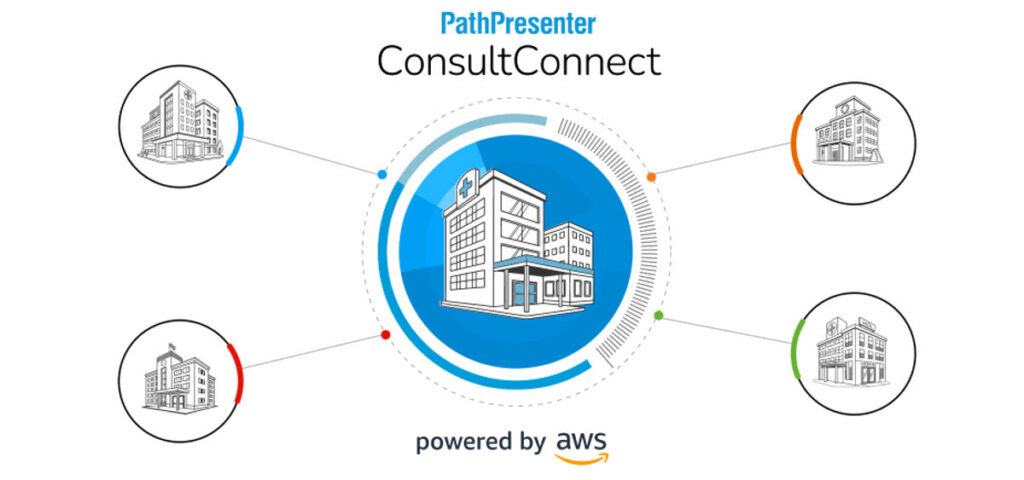
MONTVILLE, NJ / March 20, 2025 / PathPresenter, a leader in digital pathology workflow software, is pleased to announce ConsultConnect, a new solution for digital pathology consultations and remote second opinions. Built by pathologists and powered by Amazon Web Services (AWS), ConsultConnect aims to provide leading institutions with the fastest, easiest, and most cost-effective way to scale their remote second opinion programs globally.

Designed for institutions with significant subspecialty expertise, ConsultConnect addresses the two major barriers to adoption in digital pathology: budgeting and long implementation/integration times. First, ConsultConnect has no upfront implementation fees or subscription fees. Instead, there is a minimal annual commitment and simple “per-consult” pricing. Second, ConsultConnect offers a highly streamlined and simplified onboarding process, allowing institutions to get up and running with their cloud-based solution in days instead of months.

“Digital pathology has long been viewed by institutions as an expense rather than an opportunity. At PathPresenter, we aim to shift that perspective by transforming digital pathology into a profit center while expanding institutions’ global reach,” said Dr. Rajendra Singh, PathPresenter co-founder. “With AWS’s reliable infrastructure and PathPresenter’s expertise, we empower our customers to bridge the gaps in their workflows, making digital pathology a seamless, scalable, and cost-effective solution.”

ConsultConnect features all the tools required by pathologists and institution administrators to deliver remote second opinion services to referring hospitals globally. Core to the platform is a user-friendly, scanner-agnostic image viewer for pathologists to receive, view, and sign out remote second opinion cases. For administrators, the portal provides tools to easily onboard and manage referring hospitals and incoming cases. The zero-footprint platform is monitored 24/7 by industry-leading security and compliance vendor Vanta for HIPAA compliance.

ConsultConnect has been optimized to run on AWS by PathPresenter and partner CitiusTech. With healthcare-focused expertise in medical imaging, CitiusTech leveraged AWS HealthImaging services to ensure ConsultConnect delivers the very best imaging performance and data integrity, including whole slide DICOM file upload functionality. AWS HealthImaging is a purpose-built, HIPAA-eligible service for medical imaging in the cloud, giving customers the performance, scale, and low total cost of ownership needed for large pathology workloads. AWS services provide robust security measures specifically designed for handling patient data across various healthcare entities. With AWS managed services, PathPresenter is providing low-latency, petabyte-scale digital pathology in the cloud.

Early Adopter Program

ConsultConnect will be available to select institutions through an early adopter program. For more information on this program and deploying ConsultConnect, see us at the USCAP Annual Meeting in Boston, MA, March 24-26 in booth 509, or visit www.pathpresenter.com/consultconnect/.

About PathPresenter

PathPresenter is an enterprise image management and workflow platform for digital pathology. We are on a mission to democratize access to the world’s pathology knowledge by connecting pathologists to the vast expertise of their colleagues globally and providing a practical platform to access and use best-in-class AI models. Founded by dermatopathologist and digital pathology pioneer Dr. Rajendra Singh, PathPresenter’s secure, scalable, vendor-agnostic enterprise pathology workflow software has been adopted by tier one medical institutions for clinical care, education, and research, and the company has built a thriving community of tens of thousands of users around the world to easily view and share digital pathology images and knowledge. Learn more at www.pathpresenter.com.

Contact Details

PathPresenter
Neil Humphrey, VP of Marketing
+1 519 498 3402
neil@pathpresenter.com

The PathPresenter Clinical Viewer is a digital pathology image viewing and management software. It is approved for research use only and has not been cleared by the FDA as a medical device. It is the responsibility of a qualified pathologist to employ appropriate procedures and safeguards to assure the validity of the interpretation of images obtained using this device. Pathologists should exercise professional judgment in each clinical situation and examine the glass slides by conventional microscopy if there is doubt about the ability to accurately render an interpretation using this device alone.

PathPresenter and Aisencia partner for AI-Powered Workflows

Calling all AAD2025 attendees! See the future of dermatopathology workflows at the PathPresenter booth (number 816). We have partnered with AI vendor Aisencia to expedite how dermatopathologists sign out cases. Meet with PathPresenter’s Cory Batenchuk, and Catherine Cline and see how to optimize your digital derm workflow for speed, efficiency, and precision.

By combining cutting-edge AI technology with decades of dermatopathology expertise, we have created a unique workflow optimized for speed, efficiency, and precision.

Why Choose PathPresenter + Aisencia?

Our founder, Dr. Rajendra Singh, brings over 20 years of dermatopathology experience to this innovative solution. His insights have been instrumental in designing a system that delivers maximum efficiency and accuracy for dermatopathologists. Aisencia is an AI company specifically focused on dermatopathology and digital workflows, with a first-of-its-kind model that already detects and classifies 50+ types of skin lesions.

Key Features

Smart Case Prioritization

  • AI ranks cases from suspicious to non-suspicious, ensuring high-priority cases are reviewed first.

AI-Powered Macro-Based Reporting

  • Reports are pre-populated by AI for faster sign-out.
  • Upcoming voice command integration allows seamless updates and corrections.

DermPath Assist

  • AI Chatbot trained specifically for dermatopathology 
  • Functions as a co-pathologist, offering diagnostic suggestions based on case features.

Flexible Case Sign-Out

  • Supports TC/PC models for signing out cases by institution or external sites.
  • Dermatologists can push cases back to the main organization when needed.

LIS Integration

  • Fully deployed with CoPath, NovoPath, and Epic Beaker for a seamless workflow experience.

Powered by Aisencia

With AI-based case prioritization and macro-reporting that condenses the results of 50+ precision AI models for dermal lesions, our solution is set to make a significant impact on dermatopathology workflows.

Let’s Connect!

We’re excited to share how AI is reshaping digital pathology. Visit us at AAD2025 (booth 816) and discover how PathPresenter and Aisencia can transform your institution’s dermatopathology practices.

Let’s drive innovation together!

Storage: The 800-Pound Gorilla in Digital Pathology

Dr. Rajendra Singh

by Rajendra Singh MD, Co-Founder, PathPresenter
Director of Dermatopathology and Digital Pathology,
Summit Health

The 800 pound gorilla in the room

Digital pathology is transforming how pathology departments operate, offering unprecedented opportunities for research, diagnosis, and education. However, the field faces a formidable challenge: data storage. The scale of the problem is vast and growing, posing one of the most significant barriers to widespread adoption of digital pathology solutions.

The Scale of the Storage Challenge

Pathology departments generate approximately one billion glass slides annually. Each digitized whole-slide image (WSI) ranges from 1 to 10 GB in size, resulting in a staggering accumulation of thousands of petabytes and even zetabytes of data every year. Moreover, the College of American Pathologists (CAP) guidelines require glass slides to be stored for at least ten years. When combined with decades of retrospective data, the sheer volume of storage needed becomes daunting.

Adding to the complexity is the requirement for redundancy in cloud storage. These measures, while critical for data integrity and disaster recovery, exponentially increase storage demands. Moreover, viewing and analyzing these massive files requires high bandwidth, significantly driving up costs. These escalating expenses often make digital pathology appear non-viable for many institutions.

Lessons Learned in Storage Solutions for Digital Pathology

Implementing digital pathology solutions, whether on-premises, cloud-based, or hybrid, has provided valuable insights. Below are some key considerations:

  1. Understand the Institution’s Risk Profile

Cloud Aversion vs. Cloud Adoption: Some institutions are highly risk-averse, preferring on-premises storage solutions to avoid cloud-related risks. Others embrace cloud storage for its scalability and adaptability to rapid technological advances. Increasingly, institutions are opting for a hybrid approach, leveraging the benefits of both models.

Critical Insight: Aligning storage strategies with the institution’s risk tolerance is essential for a successful implementation.

  1. Define the Use Case

Digital pathology use cases vary significantly. Some institutions pursue comprehensive implementation, while others take a phased approach—starting with specific areas like consultations, education, research, or primary diagnosis.

Critical Insight: Tailoring the storage solution to the institution’s immediate and long-term goals ensures resource optimization.

  1. Understand the True Costs of Storage

The cost of storing pathology slides extends beyond the per-terabyte price. Each slide involves millions of write operations for storage and read operations for retrieval, both of which incur separate charges.

Hot vs. Cold Storage: Retrieval speed plays a critical role in cost. Hot storage, which allows instant access, is significantly more expensive than cold or archival (glacial) storage. Developing a strategy to determine what data resides in which tier is essential.

  1. Implement Data Tiering and Flagging Mechanisms

Data tiering ensures efficient and cost-effective storage. For instance:

Hot Storage: Critical cancer cases can remain in hot storage for immediate access.

Cold or Archival Storage: Benign diagnoses and re-excision cases can be moved to lower-cost options or on-premises storage.

Deletion: Data with no foreseeable use can be safely deleted according to retention policies.

Critical Insight: Automated flagging mechanisms streamline this process, ensuring data is appropriately tiered based on clinical and institutional needs.

  1. Establish Comprehensive Policies

Storage strategies must include clear policies on data retention, transfer, disaster recovery, compliance audits, and adherence to regulatory frameworks. Regular reviews ensure policies remain aligned with evolving standards and technologies.

The Path Forward

While storage remains the proverbial 800-pound gorilla in the room, addressing the challenge head-on with thoughtful planning and strategic implementation can make digital pathology a viable and transformative solution. Institutions that successfully navigate the storage conundrum will be well-positioned to leverage the full potential of digital pathology, ultimately improving patient outcomes and advancing medical science.

About the Author

Dr. Rajendra Singh is Director of Dermatopathology at Summit Health and co-founder of PathPresenter. He serves as a member of the Digital and Computational Pathology Committee of the CAP, Editorial Board of the WHO for Classification of tumors, 5th Edition and the Board of Digital Pathology Association.

Overcoming Challenges in Implementing Digital Pathology and AI at Scale: Lessons from the Field

Dr. Rajendra Singh

by Rajendra Singh MD, Co-Founder, PathPresenter
Director of Dermatopathology and Digital Pathology,
Summit Health

Pathologist symbolically breaks chains

When pathologists begin signing out cases digitally, they rarely revert to traditional microscopes. Yet, we have seen this happen. Why would pathologists revert to microscopes. What goes wrong?

One of the most frustrating aspects of digital pathology sign-out is latency—delays in opening or viewing digital slides. When loading a slide takes longer than a few seconds, it disrupts a pathologist’s workflow, leading to dissatisfaction and reduced adoption of digital systems. Seamless, fast image streaming is a cornerstone of successful digital pathology implementation. This is especially critical in high-volume pathology departments producing 1,000 to 5,000 slides per day, with each slide averaging 2–4 GB in size.

Through hands-on experience in implementing digital pathology solutions across departments that generate petabytes of data, we’ve identified and addressed key challenges contributing to image lag. Below are the lessons learned and solutions that have proven effective:

  1. Co-location of Image Storage and Processing Units
  • Challenge: Physical or network separation between storage and processing units increases latency.
  • Solution: Ensure that image storage and processing systems are located in close proximity, whether on-premises or cloud-based. This minimizes delays in slide retrieval and rendering.
  1. Smart Caching Mechanisms
  • Challenge: Frequently accessed slides take too long to load during high-demand periods.
  • Solution: Implement intelligent caching that preloads frequently accessed or recently viewed image files. By “precooking” these files, pathologists experience faster retrieval during active sign-out sessions.
  1. Load Balancing Between Servers
  • Challenge: High data use during peak times can cause bottlenecks, slowing workflows.
  • Solution: Distribute data processing tasks across multiple servers with load-balancing mechanisms. This ensures optimal utilization of resources and prevents delays caused by server overloads.
  1. Flexible Tiling Strategies
  • Challenge: Processing unnecessary image layers increases rendering time.
  • Solution: Optimize image rendering by utilizing only essential resolution layers and removing extraneous regions or layers. This reduces the processing burden and accelerates slide opening.
  1. Hierarchical Storage Solutions
  • Challenge: Storing all images in high-speed storage is costly, while slower storage leads to delays.
  • Solution: Adopt tiered storage systems. Store high-priority or frequently accessed data in high-speed “hot” storage, while archiving less-used data in lower-cost “cold” storage. This ensures critical slides are always readily available without delays.

Let’s Collaborate and Advance

What challenges have you encountered in implementing digital pathology solutions, and what strategies have worked for you? By pooling insights, we can drive faster adoption and optimize the integration of DP and AI into routine practice.

About the Author

Dr. Rajendra Singh is Director of Dermatopathology at Summit Health and co-founder of PathPresenter. He serves as a member of the Digital and Computational Pathology Committee of the CAP, Editorial Board of the WHO for Classification of tumors, 5th Edition and the Board of Digital Pathology Association.

AI in Digital Pathology: Hype vs Reality

Dr. Rajendra Singh

by Rajendra Singh MD, Co-Founder, PathPresenter
Director of Dermatopathology and Digital Pathology,
Summit Health

The promise of digital pathology lies in leveraging AI to deliver faster, more accurate, and more efficient diagnoses. Many organizations are eager to adopt these tools, even without the prospect of additional remuneration, due to their potential to alleviate the workload of overburdened pathologists. However, despite the availability of numerous AI models, their real-world implementation remains limited.

As technologists, what steps can we take to ensure that both pathologists and patients benefit from the practical application of these models?

Key Challenges and Solutions

  1. Data Security and Cloud Integration Most AI models are hosted in cloud environments outside the organization’s DMZ (demilitarized zone), causing reluctance to share sensitive patient data from the IMS (Information Management System) with the model. Proposed Solution: Dockerization of AI modules can enable secure deployment within the organization’s internal infrastructure, addressing data security concerns.
  2. Integration with IMS Viewers AI-generated outputs—such as heatmaps, annotations, bounding boxes, and textual data—often need to be displayed in the IMS viewer. However, most AI vendors mandate the use of their proprietary viewers, leading to workflow inefficiencies. For instance, a pathologist may need to navigate between multiple viewers during a single session, disrupting the diagnostic process. Proposed Solution: AI results must be seamlessly integrated into the IMS viewer. This approach eliminates the need for multiple viewers and ensures a streamlined, efficient workflow for pathologists. Vendors should prioritize compatibility over exclusivity. This is the approach we’ve taken with PathPresenter; our platform seamlessly integrates AI models from multiple AI vendors and innovators including Paige, IBEX, 4D Path, Mindpeak, and AISencia, giving users the choice of tools with a consistent workflow and UI.
  3. Validation in Real-World Settings Validation of AI models using an organization’s own data is crucial to ensure reliable performance. Testing in stand alone environments provided by AI vendors often fails to replicate real-world conditions, leading to unmet expectations. Proposed Solution: AI models should be evaluated in a sandbox environment within the organization’s infrastructure with data from the organization. This allows comprehensive testing with real data and ensures the model performs as claimed before deployment.

What challenges do you see in your environment? The real value of digital pathology will come in when AI models not only help in better and faster diagnosis, but can also be deployed for prognostication and prediction of tretament. Such advancements would not only enhance patient outcomes but also justify and incentivize the costs associated with digitization and AI adoption. As the field progresses, we look forward to the emergence of models that address these broader needs, paving the way for improved clinical utility and the integration of compensation frameworks for the use of AI in pathology.

About the Author

Dr. Rajendra Singh is Director of Dermatopathology at Summit Health and co-founder of PathPresenter. He serves as a member of the Digital and Computational Pathology Committee of the CAP, Editorial Board of the WHO for Classification of tumors, 5th Edition and the Board of Digital Pathology Association.

PathPresenter Selected by Cincinnati Children’s to Provide Comprehensive Digital Pathology Workflow Solution

Montville, NJ | December 11, 2023

PathPresenter, the global image sharing platform for pathology, was recently selected by Cincinnati Children’s to provide an integrated digital pathology workflow solution to meet the health system’s requirements across clinical care, remote consultations, education, and research.

Cincinnati Children’s, which ranks No. 1 in the nation in U.S. News & World Report’s listing of Best Children’s Hospitals for 2023-24, recently completed an extensive selective process to procure a comprehensive digital pathology workflow solution. Cincinnati Children’s, utilizing PathPresenter’s platform, seeks to improve workflow efficiencies (enabled by tight integration with its laboratory information system); expand its digital consultation network; provide new educational capabilities to advance clinical competency testing; and enable enhanced research capabilities with the ability to connect any type of AI algorithm – from 3rd party vendors or developed in-house.

PathPresenter is a secure and scalable multi-tenant enterprise workflow platform that has been developed by pathologists with deep domain knowledge and experience. Trusted by 45+ tier-one institutions, PathPresenter is the most comprehensive suite available for clinical care, remote consultations, education, and research. With expert guidance in storage optimization, tight integration with LIS systems through a proprietary HL7 engine, and robust incorporation of 3rd party and in-house-built AI algorithms, PathPresenter ensures genuine value to institutions – without the marketing noise.

While Cincinnati Children’s doesn’t endorse or sponsor any commercial products, services, or companies, Dr. Jennifer Picarsic, MD, director of Digital Pathology and AP Informatics at Cincinnati Children’s, noted that a successful digital pathology program relies not just on scanning and viewing digital slides, but rather a re-imagined vision for how pathology will be practiced in the future. “As pathology leaders, we seek to build a new digitally integrated workflow that will enhance clinical, education and research opportunities to facilitate new innovations and wider access to our expert pathologists from anywhere in the world,” Picarsic said.

Dr. Rajendra Singh, founder of PathPresenter, added “We are honored to work with the excellent clinical and technical teams at Cincinnati Children’s, given their thorough understanding and deep knowledge of what they need from a workflow provider with a complete focus on improving efficiencies ensuring better care of their precious patients. PathPresenter was created to fill in the gaps in use of digital pathology, and this further fulfills our mission.”

About PathPresenter
PathPresenter is the global image sharing platform for pathology. We are on a mission to help democratize access to the world’s pathology knowledge by connecting pathologists to the vast expertise of their colleagues globally and providing a practical platform to access and use best-in-class AI models. Founded by dermatopathologist and digital pathology pioneer, Dr. Rajendra Singh, PathPresenter has been adopted by 45+ tier one medical institutions for clinical care, remote consultations, education, and research, and has built a thriving community of 50,000+ users in 172 countries to easily view and share digital pathology images and knowledge. For more information visit www.pathpresenter.com.